

Landforms
Landforms
Section titled “Landforms”2020-04-28 23:48:56
- Landforms
- Mineral and Rocks
- Geomorphic Processes
Mineral and Rocks
Section titled “Mineral and Rocks”- Have fixed atomic structure, definite chemical composition, 2 or more elements
- Crystals appear when Magma cools,
Physical characterstics of minerals :
- External crystal form ex cubes, hexagonal etc
- Cleavage - tendency to break forming plane surfaces
- Fracture - Crystals break irregularly not along cleavage
- Lustre
- Other characterstics are colour, streak (colour of ground powder), transparency, structure, hardness and specific gravity.
Metallic Mineral : contain metals ex Precious metals, Ferrous and Non Ferrous metals Non Metallic - ex Sulphur, Nitrates etc
- Do not have definite compositin of minerals
- Petrology is study of rocks
Igneous Rocks
Section titled “Igneous Rocks”- Formed by cooling and solidification of Magma and Lava aka primary rocks
- If molten material is cooled slowly at great depths mineral grains will be very large
- Sudden cooling will result in small and smooth grains, Intermediate condition will make medium sized grains
- Examples of igneous rocks are granite, gabbro, pegmatite, basalt, volcanic breccia and tuff
Sedimentary Rocks
Section titled “Sedimentary Rocks”- Formed when Igneous, Sedimentary, Metamorphic rocks undergo denudation are later carried and deposited
- Compaction results in their formation aka lithifaction
What are the different types of Sedimentary rocks?
- Mechanically formed eg sandstone, conglomerate, limestone, shale, loess
- Organically formed eg geyserite, chalk, limestone, coal etc
- Chemically formed eg chert, limestone, halite, potash etc.
Metamorphic Rocks
Section titled “Metamorphic Rocks”- Changes form under action of Pressure, Volume, Temp
- Techtonic process force rocks down which come into contact w/ molten magma, rocks above subject huge pressure -> recrystallisation, reorganisation.
- Dynamic Metamorphism : change due to rushing and breaking but w/o chemical change
- Thermal Metamorphism :
- Contact metamorphism - occurs when rocks come into contact with hot magma and lava
- Regional metamorphism occurs due deformation caused by tectonic shearing.
- Rocks, grains or minerals get arranged in layers or lines during metamorphism this is called Foliation or Lineation
- Alternating layer of light and dark shades in minerals are called Banding
- MR Classified into foliated and Non foliated
- Examples rocks are : Gneissoid, Granite, Syenite, Slate, Schist, Marble, Quartzite
Geomorphic Processes
Section titled “Geomorphic Processes”- Forces that bring change to surface.
- Exogenic forces cause degradation and aggradation on surface ex Weathering, wasting, erosion and deposition.
- Gradation : Wearing down of relief variation through erosion.
Endogenic Geomorphic Processes
Section titled “Endogenic Geomorphic Processes”- Energy from within ex Radioactivity, Rotation and Tidal Friction and Primordial heat
- Diastrophism : cause surface to move, elevate, build up earth’s crust . Various types of diastrophic processes are :
- Orogenic : mountain building through severe folding and affects long and narrow belts of earth
- Epeirogenic : uplift or warping of large parts of crust; continental building process.
- Earthquakes
- Plate techtonics
- [[1.1 Earth#Volcanoes|Volcanism]]
Exogenic Geomorphic Processes
Section titled “Exogenic Geomorphic Processes”- Energy source is atmosphere
- ==All exogenic forces cause denudation== of material
- Mechanical and chemical decomposition by weather and climate : Weathering
- Weathering, Mass Wasting, Erosion and Deposition are examples
-
Weathering :
Section titled “Weathering :”- Mechanical disintegration and Chemical decomposition
- causes are geological, climatic, topographic, vegetative factors
- Chemical : ex carbonation, hydration, oxidation etc
- Physical/Mechanical : ex gravity, expansion due to temp, water pressure
- Biological : changes caused due to growth/movement of organisms
Exfoliation #card-reverse
- Result of Weathering
- Flaking of curved sheets of shells from rocks etc to form smooth and rounded surface
- caused due to expansion and contraction
-
Mass Movement
Section titled “Mass Movement”- Rock debris movt under direct influence of Gravity
- Weathering not a prerequisite
- No geomorphic processes participate viz glaciers, wind, waves, currents etc
- Heave, flow and slide are types of movt
Landslides
- Rapid movt of rock in a slope without backward movt is called Slide
- Slump is flow w/ backwards rotation of material, slide has no such phenomena
Erosion and Deposition
Section titled “Erosion and Deposition”- Weathering not a precondition
- Deposition is consequence of erosion when agents lose their[[Soils#Soil Formation|Soil Formation]] is a consequence of it
[[kegy205.pdf]] - Minerals and Rocks [[kegy206.pdf]] - Geomorphic Processes
Running Water
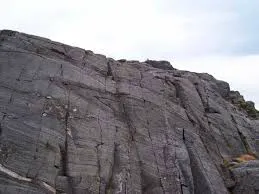
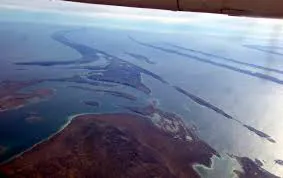
Section titled “Running Water”When rivers reach maturity in lower slopes, lateral erorsion causes flat low relief plain called peneplaing, the other formation is a Monadnock.
- Isolated hill of bedrock standing above the general level is called a Monadnock, aka inselberg.
- Low-relief plain formed by protracted erosion is called Peneplain.
Characterstics of Various Stages of Rivers
Section titled “Characterstics of Various Stages of Rivers”- Youth
- V shaped valleys, Waterfalls, Rapids, Interlocking spurs, Potholes,
- Meanders can also exist but not widely present
- Vertical erosion causes steep sides and narrow frills to form V Shaped valleys
- Mature
- Floodplains, deep V shaped valleys, strean divides become sharp
- Swamps and Marshes of Y stage disappear
- Old
- Vast Floodplains, Ox bow lakes, Deltas, Natural Levees
Running Water Erosional Landforms
Section titled “Running Water Erosional Landforms”- Valleys
- Start as rills -> gullies -> valleys
- V-shaped, Gorge, Canyon are types
- Deep valleys with steep to straight sides they are formed in hard rocks called gorges.
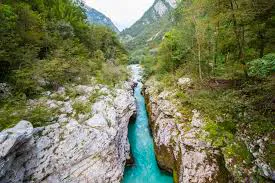
- Gorge that have steep step like slope are canyons
- wider at the top than at bottom and forms on sedimentary rocks
- Potholes and Plungepools
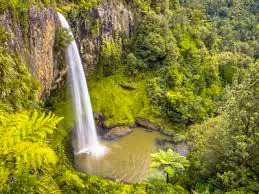
- Circular depressions formed in rocky beds of hill streams through stream erosion and abrasion of rocks are called Potholes.
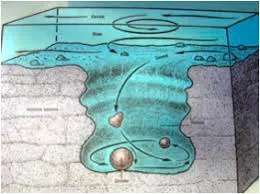
- Series of potholes is a plungepool, formed due to constant rotation of boulders and impact of water within a pothole
- Incised/Entrenched Meanders
- When meanders form in hard rocks they are called Incised or entrenched meanders
- River Terraces
- Formed due to vertical erosion by the stream into its own depositional floodplain
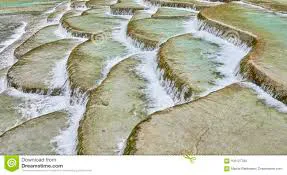
- When river terraces occur on either side they are called Paired terraces
Running Water Depositional Landforms
Section titled “Running Water Depositional Landforms”- Alluvial Fans
- formed at foot slope of low gradient when load becomes too heavy for streams to carry
- cone shaped deposit
- forms many distributaries
- Deltas
- Similar to Alluvial fans but form at mouths of river.
- Well sorted with clear stratification - coarser material settles first finer ones carried to sea
- Floodplains
- formed when water spills over the banks and deposits silt and clay
- When they are above the banks called inactive floodplain.
- contain 2 types of deposit : flood and channel deposits.
- Natural Levees.
- Low linear and parallel ridges of coarse deposits along the banks of river are called
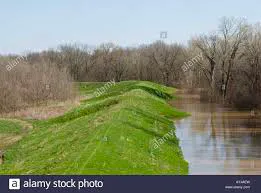
- Point Bars aka Meander Bars found in concave side of ox bow lakes are sediments deposited inlinear fashion along banks contains mixed size of sediments
- Meander
- Formed due to lateral erosion of streams flowing over gentle slope common in flood and delta plains
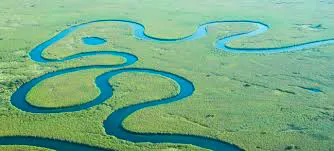
- not a landform but a type of channel pattern formed due to :
- Lateral erosion in gentler slopes
- unconsolidate alluvial deposits exerting lateral pressure
- coriolis force acting
Groundwater
Section titled “Groundwater”Groundwater Erosional Landforms
Section titled “Groundwater Erosional Landforms”- Karst topography
- formed underground due to dissolution of sloluble rocks viz limestone, dolomite, gypsum etc
- characterised by sinkholes and caves.
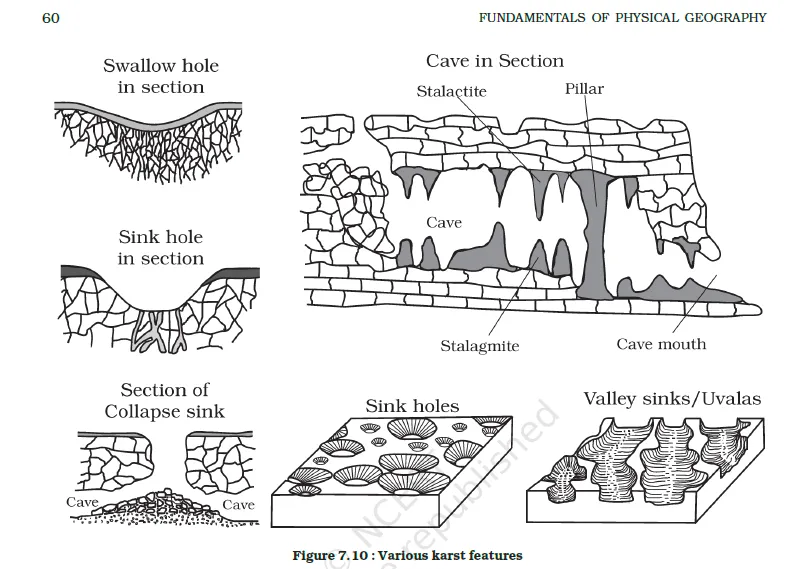
- Small to medium sized round to sub rounded shallow depressions
- formed on the surface of limestones
- Sinkholes
- openings circular at top and funnel shaped towards bottom
- connected to a cave/roof of a void at the bottom
- may collapse forming dolines
- Uvalas
- Closed Karst depressions
- formed when sink holes and dolines join together because of slumping of materials along the margins or due to roof collapse.
- Lapies or Karren or Ridges
- Irregular, grooved, ridge like features in an open limestone field
- formed due to solution activity along parallel and sub paralleljoints
- eventually transform into limestone pavements
- Caves
- formed when water percolates and dissolves limestones
- Cave w/ openings on both sides called tunnels
Groundwater Depositional Landforms
Section titled “Groundwater Depositional Landforms”- Stalacites hang like icicles in caves they drip to form Stalgamites at bottom.
- Eventually both join to form pillars and columns
Glaciers
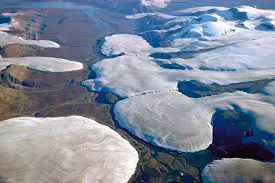
Section titled “Glaciers”- Piedmont glacier
- valley glacier that spilled onto relatively flat plains
Glacier Erosional Landforms
Section titled “Glacier Erosional Landforms”- Cirques
- bowl-shaped, deep, long and wide depressions that glaciers carve into mountains and valley sidewalls at high elevations.
- Lakes can form at such places they are called cirque or tarn lakes.
- Horns
- formed when 3 or more radiating glaciers cut headward until their cirques meet.
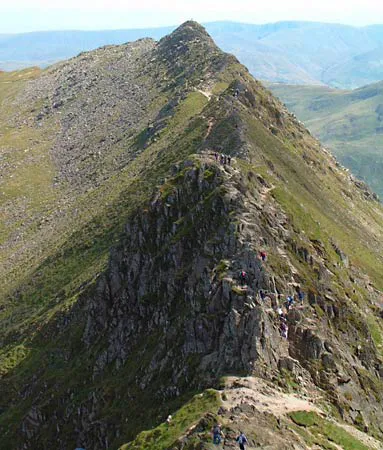
- Serrated/Saw Toothed Ridges
- divide between cirques or head walls get narrow and turn into Serrated or saw tooth ridges aka Aretes.
- Glacial Valleys/ Troughs
- U Shaped w/ broad floors, smooth and steep sides
- may contain Moraines
- Fjords are Deep glacial troughs filled with sea water making up the shorelines.
Glacier Depositional Landorms
Section titled “Glacier Depositional Landorms”- Glacial tills - unassorted, coarse and fine debris dropped by melting galciers. Rock fragments are angular/sub angular
- Moraines are Glacially formed accumulation of unconsolidated glacial debris (regolith and rock)
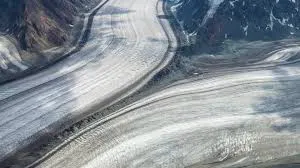
- Outwash deposits are glacio fluvial deposits are stratified and assorted
- Moraines
- long ridges of deposits of glacial tills
- Types of Moraines :
- Lateral moraines : parallel to valleys they join to from horse shoe shaped ridge.
- Ground Moraine : formed by retreating glacier leave irregular sheet of till
- Medial Moraine in the centre.
- Hanging Valleys are tributary valleys that hang above the main valley, commonly seen in U Shaped valleys.
- Winding ridge of un-assorted depositions of rock, gravel, clay etc. running along a glacier in a till plain are called Eskers
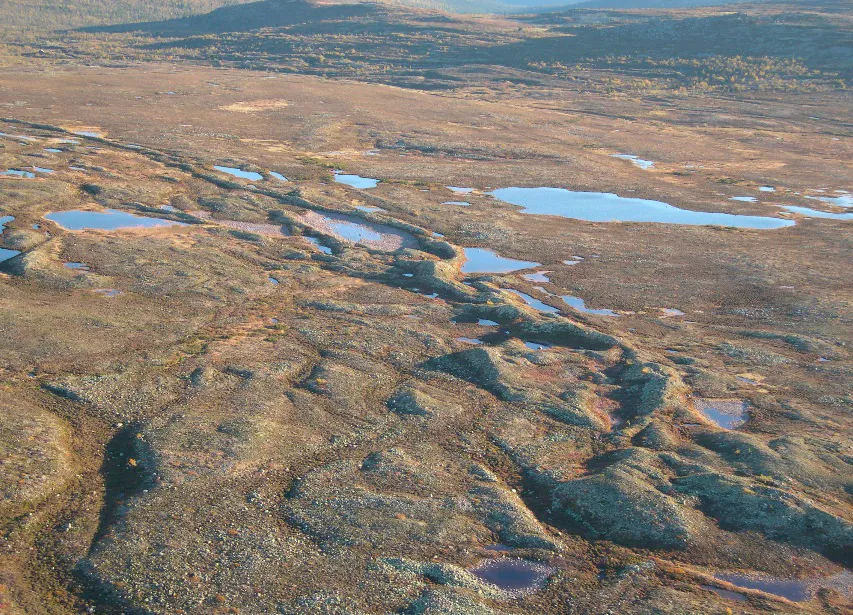
- Drumlin :
- Inverted boat-shaped deposition in a till plain caused by deposition
- has a stoss end and a tail
- composed of gravel, sand
[[kegy207.pdf]] - Landforms and their evolution